The Divine Test
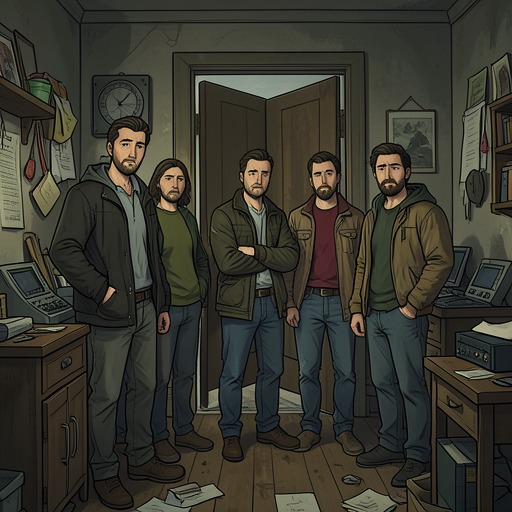
The Cabin at the End of the WorldThe Divine Test is Leonard’s explanation for why Andrew, Eric, and Wen must choose one member of their family to die in order to prevent the apocalypse. It makes a coercive demand sound like a sacred trial: the family is told it has a choice, but refusal is said to doom humanity, and the family remains confined while the deadline advances. The test’s force comes from the collision between an immense predicted consequence and the ordinary moral fact that no one can freely consent under such pressure.
The Test and Its Terms
Leonard presents the test as a decision the family must make willingly: they must select one of their three and then carry out that person’s death. If they do not choose, or do not complete the sacrifice, he says the rest of humanity will perish while the family survives to witness the aftermath. The proposition thus frames the family’s survival not as an escape but as a burden, and makes the fate of billions depend on their compliance.
The visitors do not present this as an abstract belief. Leonard says they will keep the family in the cabin until a choice is made or the available time runs out. He also promises that they will not further harm Andrew, Eric, or Wen and will meet their needs within limits. That promise does not undo the confinement: the family is still required to decide while held in place, with the possibility of global catastrophe made the stated cost of saying no. The arrangement’s central contradiction is that Leonard calls the sacrifice willing while the circumstances are designed to make refusal feel unbearable.
Visions as the Test’s Foundation
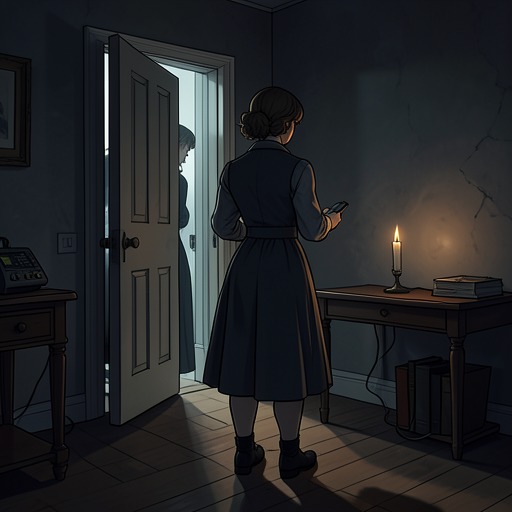
Leonard grounds his certainty in visions shared, he says, by himself, Sabrina, and Adriane. They saw the lake and the little red cabin, and he recalls details as specific as the dirt road and the grain of the wood on the front door. In his account, the vision also disclosed that a family would be there and that the family would have to make a sacrifice. Place, prediction, and command are joined: the cabin is not merely where the visitors encounter the family but, for Leonard, evidence that the sequence was chosen in advance.
He extends the vision’s meaning beyond the intruders. Leonard insists that Andrew, Eric, and Wen are also being tested, and that all those present were chosen for a reason. The test therefore claims authority over both sides of the confrontation, even though the visitors have taken control of the family’s immediate circumstances. Its religious explanation makes obedience appear to be participation in a larger design, while leaving the people required to obey with no independent means of verifying that design.
A Repeated Choice Under Pressure
The test is reinforced through a deadline and repeated appeals. After the family rejects the demand, Leonard says it will be offered the same choice again the following morning. He describes the decision as a gift and calls sacrifice selfless, while warning that each delay brings the world closer to permanent midnight. The repetition gives the demand a ritual-like structure, but does not create new information or make the family’s consent freer. It renews the same ultimatum in the same confined setting.
Andrew answers that the family does not need to wait until morning and will not change its minds. His response directly refuses the timetable’s implied promise that time will turn the demand into an acceptable choice. Eric, meanwhile, tries to keep the conversation going by asking Adriane about the restaurants where she worked. His effort to draw the visitors back toward their former lives interrupts the movement toward a decision, treating conversation and personal history as alternatives to the narrow roles imposed by the test.
Authority, Doubt, and Resistance
When asked who is making the visitors do this, Leonard identifies God. Saying the word brings him both relief and terror, a response that complicates his assurance: the claim offers an explanation for the violence and pressure, yet its utterance visibly unsettles him. Later, when Leonard says that sacrifice will happen one way or another, Andrew reacts sharply. The language of divine necessity has shifted from an invitation to choose to an assertion that the outcome is unavoidable.
Leonard also instructs the family not to let the past distract from the test, arguing that past actions will be erased and that what matters is the present decision. Eric challenges this reasoning, telling him that questioning the demand is exactly what they should be doing. Andrew presses the same moral challenge by asking the visitors to consider the family’s captivity and the killing of Redmond rather than treat the ritual as normal. These objections address not only whether the prediction is true, but whether the visitors’ conduct can be made right by invoking it.
The Test’s Unresolved Meaning
As the evidence of disaster accumulates, Andrew finds it harder simply to dismiss what the visitors have predicted. He acknowledges that drowned cities, plague, and catastrophic events have occurred, then asks Eric directly whether one of them must be killed by the other to keep the world from ending. The question marks a crisis of interpretation, not a demonstrated acceptance of Leonard’s doctrine: the possibility that the prediction is real has become harder to separate from the demand that the family commit an act it rejects.
The Divine Test is therefore defined by a gap between its declared spiritual purpose and its actual conditions. Leonard calls it a trial in which everyone has been chosen, but the family experiences it as a forced choice, and the visitors themselves do not remain beyond doubt. The concept gives the apocalyptic threat a moral form—sacrifice as the price of collective survival—while the scenes surrounding it expose the limits of that form. A choice issued under confinement, backed by the threatened death of humanity, may be called voluntary by its authors; the family’s resistance keeps that claim in question.